Small Batch Sauerkraut (Kiseli Kupus Ribanac)
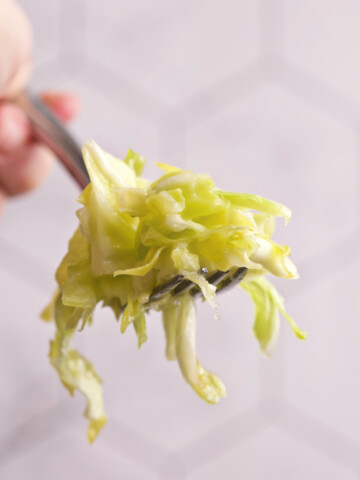
Small batch sauerkraut (kiseli kupus ribanac) deserves a place in every kitchen! This homemade shredded fermented cabbage is nourishing, timeless, and a true gut gem! Our simple instructions make it easy to commit without weeks of planning! Shall we?

Jump to:
Background
Long before probiotics became a global thing, generations of Balkan moms knew the importance of fermenting - and pickling.
Revered Balkan dishes - from sarma rolls to podvarak - owe their tang and depth to this ancient method.
Even today, across the region—from Bosnia to Montenegro and beyond—late summer and early fall are that special time when fruit and veggies are sliced, diced, salted, and/ or acidified.
You may remember that we shared the process for fermenting cabbage heads with you before.
But what if you just want a few forkfuls - no waiting, no barrels, and no lingering smell?
That's where today's small batch of grated sauerkraut comes in.
Locally called kiseli kupus ribanac, it literally translates to “shredded sour cabbage,” distinguishing it from the typical whole cabbage heads that are fermented.
This smaller batch of grated sour cabbage is designed for modern kitchens, small households, or anyone curious about minimal effort fermentation.
Yes, you heard that right! The effort is minimal.
In fact, fermenting doesn't have to become a full time hobby for you to enjoy the benefits of this sour deliciousness!
Our method keeps it simple, approachable, and forgiving - all while packing incredible nutrients that support a healthy gut microbiome.
Why You'll Love Shredded Sauerkraut
- No special gadgets necessary! Grab some jars, cabbage and salt, and you're in business!
- No expertise necessary! Whether it's your first, or fiftieth, time making sauerkraut, it comes out perfect and perfectly tangy!
- Scaling up is easy! Want a bigger batch? Make a bigger batch! The process is exactly the same whether you're making a few jarfuls or twenty of them!
Ingredients
We weren't kidding saying you only need a handful of ingredients to make shredded sauerkraut at home (whether a small or a large batch!):

- Cabbage. A large cabbage head. We like the green kind, but you can do purple too.
- Salt. Some prefer sea-salt, but we never had any problems with table salt or kosher salt. Avoid flavored or smoked salts.
- (Optional) Carrots. One or two - grated - add color and flavor.
- (Optional) Peppercorn. Or ground pepper, also add flavor.
- (Optional) Minced Parsley.
Instructions
Here's how to make what we call the world's easiest small batch of sauerkraut (kiseli kupus ribanac).

Step 1. Remove a couple of outer cabbage leaves, and any overly ripe, soft or impure parts.
Step 2. Halve the cabbage, remove the core.
Step 3. Shred, grate, cut, or thinly slice the cabbage.
Step 4. (Optional, not pictured.) Shred carrots. Mince parsley.
Step 5. Place everything on a tray. Mix. Sprinkle with salt generously.
Step 6. Leave overnight at room temperature.

Step 7. Pack tightly into a clean jar(s) so it submerges in its own liquid. Add a bit more liquid if needed.
Step 8. (Optional) Add a small fermentation weight, or a plastic submerger on top.
Step 9. Loosely cover the jar, and place on a tray. Let the cabbage ferment at room temperature (or near a window) 7-10 days. If needed, replenish liquid that leaves the jar.
Step 10. (Not pictured.) When you're happy with the taste and tanginess, close the lid, label the date, and refrigerate. It will continue to ferment in the fridge, but at a much slower rate.
Handling
Here are a few tips on handling homemade sauerkraut.
- Serve cold as a salad, alongside roasted meats, with beans, or layered into sandwiches.
Alternatively, heat up in a pan with sausage and some eggs. Possibilities are endless.
- Store in the fridge for up to two or three months. Sauerkraut will continue to slowly ferment in the fridge and get even more flavorful with time.
If the brine develops unusual colors (such as pink, black, or blue), it becomes slimy, or the smell starts resembling sulfur, discard.
- Freezing homemade shredded sour cabbage is a bit complicated. For success, follow the directions closely.
(As always, we recommend making a new batch of shredded sauerkraut rather than freezing it. Method is simple, and ingredients available - you can easily make homemade sauerkraut year long.)
Discard any damaged or overly soft pieces. Drain thoroughly before freezing, as excess liquid damages sauerkraut texture.
Portion shredded sauerkraut before freezing. Place into freezer bags and leave 1-2 inches (2–5 cm) of space at the top as water in cabbage expands.
Seal bags tightly, pressing out as much air as possible to prevent freezer burn. Freeze flat. Label bags and use within 6-8 months.
- Thawing is bet at room temp (or in the fridge overnight). Use immediately.
Once thawed, never refreeze homemade shredded sauerkraut!
Variations

Different cuts. Shredded sauerkraut is incredibly versatile. You can slice, cut, shred, process, or grate it into fine pieces - or leave it in larger chunks or quarters.
Keep in mind that bigger pieces may need a day or two longer to ferment, but the taste and quality remain the same.
Large batch. If you want a larger batch of sauerkraut - but not necessarily whole heads - the process is the same.
We sometimes prepare a batch using 10 cabbage heads, 1 lb (450 g) carrots, 1 oz (30 g) fresh parsley, a handful of peppercorns, and salt.
This yields about 20–25 jars (24 oz / 750 ml each). The steps don’t change—it simply takes a little more time and space.
Red (purple) cabbage sauerkraut. Same steps will yield a slightly sweeter option with red/ purple cabbage heads. (We recommend the green though!)
Expert Tips
Here are a few tips based on our experience.
1. Submerge the cabbage. Although the cabbage releases plenty of its own liquid, it's a good practice to keep all of it fully submerged in brine.
Some disagree. However, our shredded sauerkraut is intentionally more sour and ferments more days at room temperature. If it isn’t kept submerged, it can get moldy.
If you prefer a slightly less sour taste, you can ferment it for only 3–5 days before refrigerating. You’ll likely be fine without adding extra water.
(If you notice any changes in color, or a putrid smell, discard immediately.)
2. Trust your senses. If it smells like sulfur, it's not good. If the brine is pink or blue, also not good. If you have a bad feeling about it, discard.
It's easier to make a new batch than to worry about whether it's gone bad.
3. Salt volume. Salt volume is only a suggestion. Use more if you'd like, but not less.
Salt is crucial as it directly helps the fermentation process. You can always wash the sauerkraut before using.
4. Label label label! Once you make this a few times you'll probably be hooked for life, and want to experiment with different amount of fermentation days, etc.
Label the jars with the date you fermented the veggies, and the date you put in in the fridge. This will give you great info for the next batch.
Recipe FAQs
It can take anywhere from 3-20-ish days to ferment shredded sauerkraut. It depends on your taste preference and the temperature of the room.
We usually ferment it for 7-10 days on average. The longer it ferments, the tangier homemade shredded sauerkraut gets.
Absolutely! Fermentation weight is just an aid. If you pack the jars tightly you'll be fine without it. We hardly ever use it.
Alternatively, some tightly pack sauerkraut with a reserved whole cabbage leaf at the end. We haven't tried this method, but it sounds good to us.
Yes! Cloudy brine is a natural fermentation process, and a good sign that you're on the right track.
However, if your brine turns pink, blue or black, discard.
Not really.
While sauerkraut won't spoil easily, it will be increasingly more sour if you come close to that 20-ish day mark at room temperature.
Salads We 💙
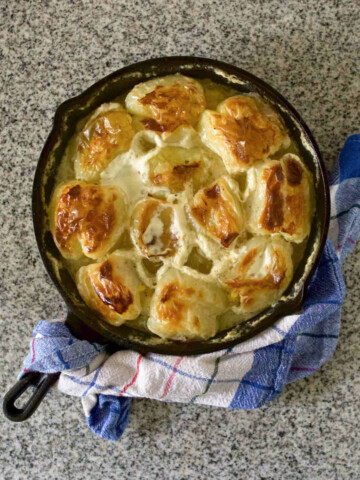
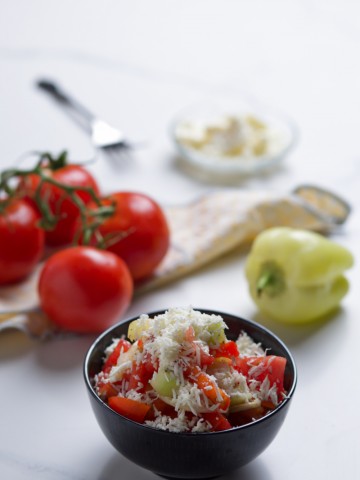
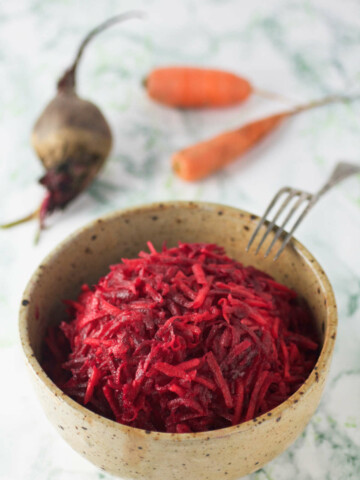
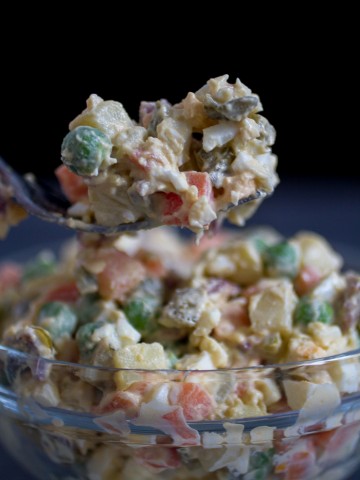
Here are a few more delicious salads beloved in the Balkans. You'll find everything from the typical Olivier, to shredded beets salad.

Thoughts?
If you made a Small Batch Shredded Sauerkraut (Kiseli Kupus Ribanac) and liked it, please consider giving it a ⭐️⭐️⭐️⭐️⭐️ (5-star) rating. This helps others find the recipe more easily!
Also, feel free to leave a comment (I read each one!), and don't forget to tag a photo #balkanlunchbox, or us @balkanlunchbox, on IG.
Prijatno, Dobar Tek, and Bon Appetit!

Small Batch Shredded Sauerkraut (Kiseli Kupus Ribanac)
Equipment
- 2-3 different sized jars (for ex. 24 oz / 750 ml, or 4-5 jars that are 16 oz / 500 ml)
Ingredients
- 1 green cabbage head (about 2.5-3 lb / 1.2-1.5 kg) purple cabbage is fine, however the flavor will be sweeter
- 2-3 tablespoons salt table salt, kosher or sea salt all work; avoid flavored / smoked salts
- (Optional) 1-2 large carrots
- (Optional) 1-2 tablespoons (15-30 g) fresh parsley
- (Optional) 1 tablespoon (15 g) peppercorn, or coarser ground pepper
Instructions
Fermenting
- Remove a couple of outer cabbage leaves, and any overly ripe, soft or impure parts. You'll lose about ½ lb (250 g) this way.
- Quarter the cabbage, remove the core.
- Shred, grate, cut, or thinly slice the cabbage.
- (Optional) Shred carrots. Mince parsley.
- Place everything on a tray. Mix with your hands. Sprinkle with salt generously.
- Leave for several hours, or overnight, at room temperature.
- Pack tightly (press really well with your fist) into a clean jar(s) so it submerges in its own liquid. Add a bit more liquid if needed.
- (Optional) Add a small fermentation weight, or a plastic submerger on top.
- Loosely cover the jar(s) and place them on a tray. Ferment at room temperature (or near a window) for about 7–10 days, replenishing any liquid that escapes. The tray will catch overflow during active fermentation.
- Taste after 7-10 days. Once it reaches your preferred level of tanginess, close the lid, label the date, and refrigerate. It will continue to ferment in the fridge, but at a much slower rate.
Storing
- Serve shredded sauerkraut cold as a salad, alongside roasted meats, with beans, or layered into sandwiches.Store in the refrigerator for 2–3 months. It will continue to ferment slowly and become more flavorful over time. Discard if the brine shows unusual colors (pink, black, or blue), turns slimy, or develops a sulfur-like smell.Freezing is possible but tricky. Discard damaged or overly soft pieces and drain thoroughly. Portion before freezing, place into freezer bags, and leave 1-2 inches (2–5 cm) of headspace for expansion. Seal tightly, pressing out as much air as possible, freeze flat, label, and use within 6–8 months. Thaw at room temperature (or in the fridge overnight), and use immediately. Never refreeze once thawed.
Notes
- Nutrition Information
- Variations
- Expert Tips